
Ways To Color Block : Hues
“Style is not just about what you wear, but how you wear it. Color blocking with hues is the ultimate expression of confidence and creativity. Dare to mix, match, and make a statement with the vibrant colors of the spectrum.”
Yo know Color Theory ? Yes! By understanding it Color Blocking becomes easy and fun.
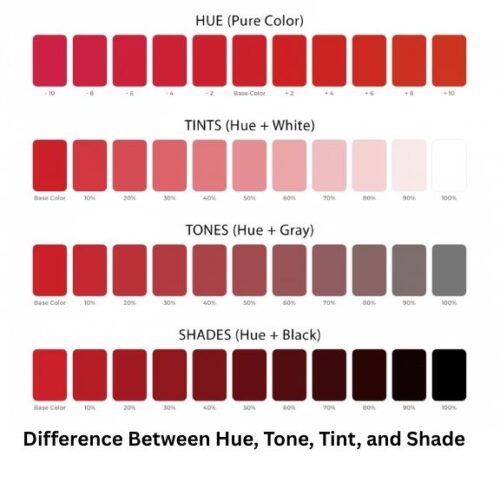
What is Hue ?
A Hue is a “Pure Pigment“, meaning it is a pure color without added white or black. Hue is the beginning color of all colors. It is the base color of every color you see.
Color blocking with hues is a fun and creative way to style outfits by using bold, solid colors in combination. By carefully selecting contrasting or complementary colors, you can transform simple outfits into eye-catching statements. Here are different ways to color block effectively using various hues:
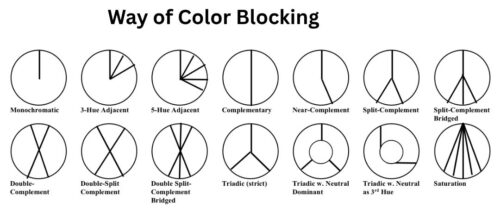
Hue Scheme Structures
These diagrams represent the most common structured hue schemes.
Note that each structure — the black bars, below — can be rotated freely around the center of the color wheel. Thus, the hues can vary, but the relationship between the hues within a scheme holds constant.
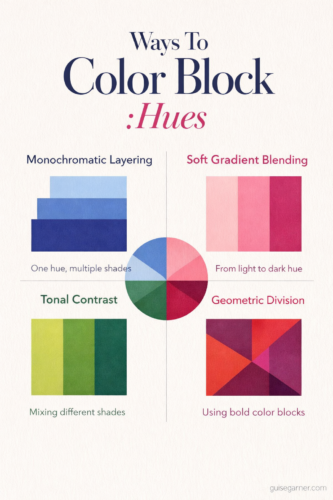
Monochromatic Color Blocking
This technique involves using different shades, tints, and tones of the same hue to create a clean, cohesive look. It’s one of the easiest methods to color block as the color family remains consistent.
- Example: Pair light pink pants with a darker pink top or combine shades of blue like pastel blue and navy.
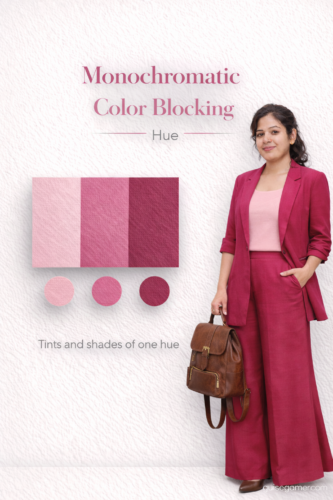
Why it works: It creates a balanced, polished outfit while allowing you to explore a range of shades without the risk of clashing.
Complementary Color Blocking
Complementary hues are colors that sit directly opposite each other on the color wheel. When paired, they enhance each other and create bold, high-contrast outfits.
- Example: Pair a bright blue dress with an orange jacket, or combine red trousers with a green blouse.
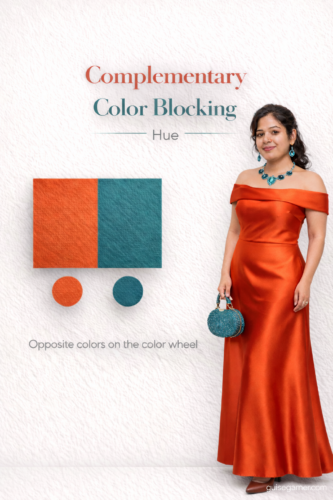
Why it works: These colors intensify each other, creating a strong visual impact that’s perfect for making a bold fashion statement.
Analogous Color Blocking
Analogous hues are next to each other on the color wheel and naturally blend well together. This technique creates a smooth and harmonious look with a softer contrast than complementary colors.
- Example: A yellow dress paired with an orange coat or a blue blouse with green pants.
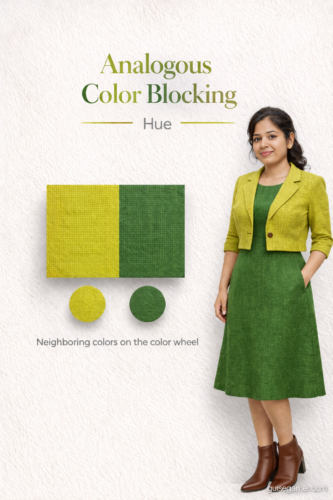
Why it works: Analogous colors provide a more subtle, seamless transition between hues, making the outfit look well-coordinated without being too loud.
Triadic Color Blocking
Triadic color blocking involves three hues that are evenly spaced around the color wheel, creating a dynamic, balanced contrast. It’s one of the more vibrant color-blocking techniques.
- Example: A combination of yellow-orange top with green-blue a line skirt. Accessories it with Red violet color – belt, structured handbag. Add yellow-orange colored Lotus studs along with green-blue heels.
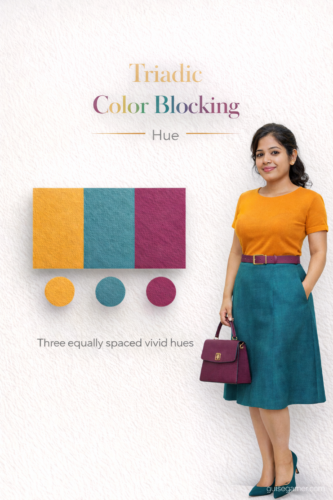
Why it works: Triadic schemes balance vibrancy with harmony, ensuring that all colors stand out equally without one overpowering the others.
Split Complementary Color Blocking
This method involves using one base hue and two hues adjacent to its complementary color. It’s a slightly toned-down version of complementary color blocking, offering more variety while still maintaining contrast.
- Example: If your base color is purple, pair it with yellow-green and yellow-orange.
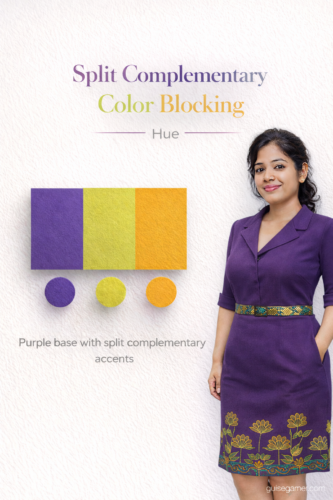
Why it works: Split complementary schemes offer vibrancy without the intensity of full complementary colors, making the outfit easier on the eyes while still visually interesting.
Neutral with Bright Hues
Pairing neutral tones like black, white, grey, or beige with bold hues is a great way to ease into color blocking. The neutral colors provide a solid base, allowing the bright hues to pop without overwhelming the outfit.
- Example: A white top with cobalt blue pants or a black dress with bright yellow heels. A Neutral off shoulder dress with a belt having bright accents.
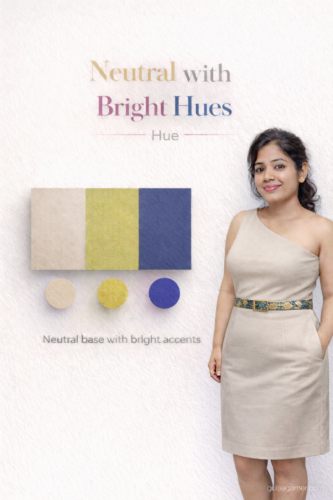
Why it works: The neutral colors ground the outfit, letting the bright colors take the spotlight while keeping the overall look balanced and wearable.
Pastel Color Blocking
Soft, pastel hues create a delicate and feminine color-blocking effect. Perfect for spring and summer, pastel color blocking adds a refreshing lightness to your outfit.
- Example: A baby blue skirt paired with a lavender top or a mint green dress with light peach accessories.
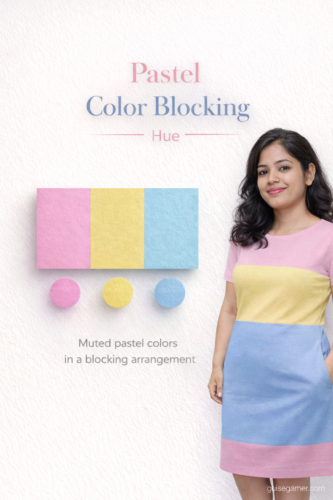
Why it works: Pastel hues offer a softer take on color blocking, making them ideal for creating a fresh, elegant look that’s less bold but still stylish.
High-Contrast Color Blocking
For those who want to stand out, high-contrast color blocking uses bright, opposing hues that create a stark difference. This method is bold and draws immediate attention.
- Example: A bright yellow top paired with deep purple pants or a red dress with teal accessories.
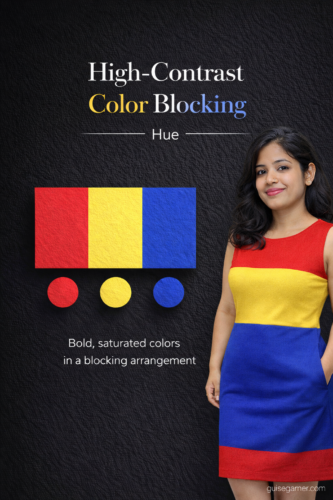
Why it works: The high contrast between hues creates a striking and memorable look, perfect for occasions where you want to make a bold impression.
Metallic and Color Blocking
Incorporate metallic hues like silver, gold, or copper into your color-blocking outfits for a modern and edgy twist. Metallics act as a neutral while adding shine and texture.
- Example: Pair a silver skirt with a pastel pink top or combine a gold jacket with deep blue pants.
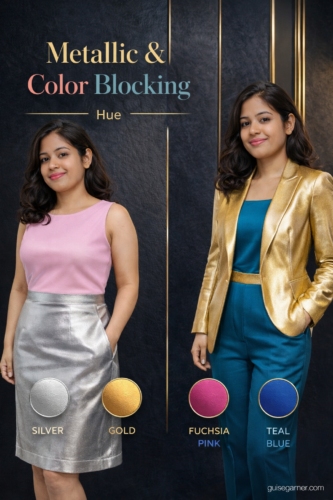
Why it works: Metallics add an extra dimension of shine and sophistication to your color-blocking outfits, perfect for evening events or making a style statement.
Seasonal Color Blocking
You can adapt your color-blocking choices to match the season, which helps your outfits feel timely and trendy.
- Spring: Use soft pastels like peach, mint green, and lilac for a light, airy look.
- Summer: Opt for bold, bright colors like neon pink, electric blue, and lemon yellow.
- Autumn: Earthy tones like rust orange, mustard yellow, and deep olive green work best.
- Winter: Darker, richer hues such as burgundy, navy, and forest green create a cozy, sophisticated vibe.
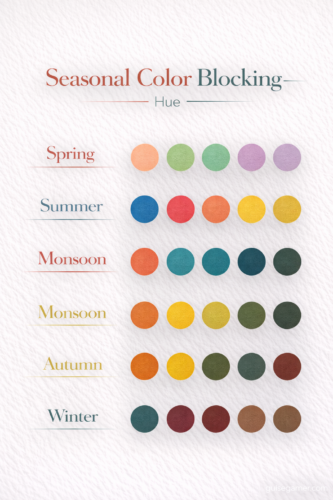
Why it works: Aligning your color choices with the seasons makes your wardrobe feel fresh and in sync with the environment around you.
Tips for Mastering Color Blocking with Hues:
- Keep It Simple: Stick to two or three colors in your outfit. Too many colors can make the outfit look cluttered.
- Consider Proportions: Balance how much of each color you use. Try a dominant color with smaller pops of contrasting hues.
- Experiment with Accessories: If you’re not ready to fully commit to color-blocking clothing, start with colorful accessories like shoes, bags, or jewelry to introduce a pop of color.
- Mix Textures: Combine different fabrics, like a silk blouse with cotton pants, to add depth and interest to your outfit.
- Match to Your Skin Tone: Some hues complement certain skin tones better than others. Test different color combinations to find what suits you best.
With these techniques, you can master color blocking using hues in a way that reflects your personal style. Whether you prefer soft pastels, bold contrasts, or a mix of neutrals and bright colors, color blocking offers endless possibilities for creating visually stunning outfits.
Find more fashion tips, color block ideas, bold color combinations, and learn more about styling with colors—nowhere but with Guise Garner!
Thank you for being a valued reader and part of our fashion journey !



I agree with your point of view and found this very insightful.
Thanks for taking the time to break this down step-by-step.