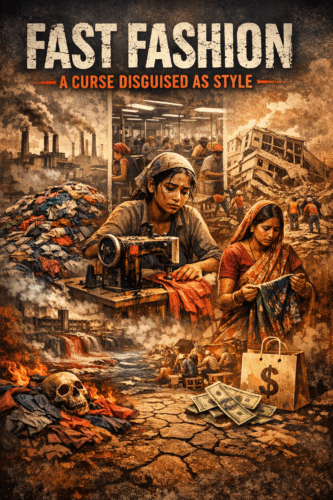
Fast Fashion A Curse Disguised as Style
Because fashion should be sustainable and beautiful not cruel to an innocent life.

Introduction – The Attractive Trap
Imagine this.
You see a trendy top. Stylish. Affordable.
You buy it without thinking.
Two washes later, it fades.
After one month, it tears.
Next month, you buy another.
This cycle repeats.
What looked like smart shopping quietly becomes waste, pollution, and exploitation.
Fast fashion smiles on the surface, but underneath, it quietly harms people, planet, and culture.
It is not just a business trend.
It is a growing crisis wearing pretty clothes.
What Exactly Is Fast Fashion
Fast fashion means producing clothes at extreme speed and extremely low cost to match short-lived trends.
Designs are copied from runways or social media.
Factories manufacture them in bulk.
Stores sell them cheaply.
Consumers discard them quickly.
Simple.
But dangerous.
Fashion was once about craft and identity.
Now it is about speed and volume.
From four seasons a year, we now have fifty micro-seasons.
Clothes are no longer valued. They are consumed.
How the System Really Works
Speed Over Skill
Garments are made in days, not months. There is no time for quality control or craftsmanship.
Copy, Produce, Dump
The formula is brutal:
- Copy design
- Produce cheaply
- Sell fast
- Replace quickly
No emotion.
No durability.
No respect for labour.
Only profit !
The Environmental Disaster

Pollution In water Bodies.

Water Contamination
Textile dyeing releases chemicals into rivers. Entire communities lose clean water. Fish die. Soil becomes toxic.
A single T-shirt can consume thousands of liters of water.
Think about that.
One shirt.
Mountains of Textile Waste
Millions of clothes are dumped yearly. Many are polyester and plastic-based.
They do not decompose for decades.
Landfills today are literally “graveyards of fashion.”

Climate Impact
The fashion industry produces more emissions than aviation and shipping combined.
Fast fashion multiplies this damage.
Cheap clothes leave a very expensive carbon footprint.

The Human Cost
Low Wages
Workers sew for 12–14 hours daily and still struggle to survive. Their pay barely covers food.

Unsafe Factories
Poor ventilation. No safety exits. Overcrowded floors.
Clothes are safe. Workers are not.
The Rana Plaza Warning
The collapse of Rana Plaza shocked the world. Thousands were injured and many lost their lives while producing garments for global brands.
That tragedy answered a painful question:
“How can clothes be so cheap?”
Because someone else pays the price.

The Illusion of Cheap Pricing
Fast fashion tricks us.
You think:
“I saved money.”
Reality:
- You buy more
- Clothes last less
- Wardrobes overflow
- Money drains faster
Quality garments last years. Cheap garments last weeks.
Which is truly affordable?
Psychological Manipulation of Buyers Fast fashion plays with emotions:
- Fear of missing out
- Trend pressure
- Constant comparison
You feel outdated even when your clothes are new.
It creates hunger, not satisfaction.
Like junk food for the wardrobe.
Quick pleasure. Long-term damage.
Destruction of Handloom and Craft Traditions
This is where the issue becomes personal and serious, especially for someone rooted in pure fabrics and artisan work like you.
Handloom weavers, embroiderers, and textile artists cannot compete with mass machines.
Their skills fade.
Their income drops.
Their heritage disappears.
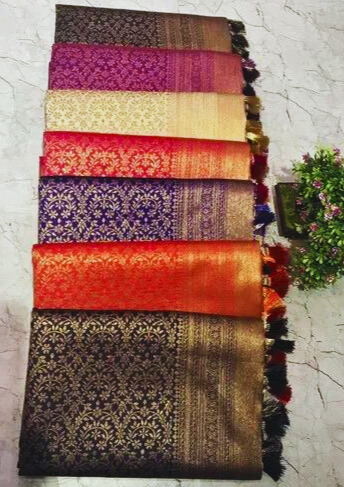
A handwoven saree that takes 20 days to craft cannot match a machine-made copy produced in 20 minutes.
Fast fashion does not just sell clothes.
It erases culture.
Role of Social Media and Micro-Trends
Every week:
“New aesthetic”
“New core”
“New look”
People buy outfits for one photo.
Fashion becomes content, not clothing.
Closets become temporary storage before landfill.
Is this really style?
Or just speed addiction?
Fast Fashion vs Slow Fashion
Fast Fashion
- Disposable
- Trend-based
- Polluting
- Exploitative
Slow Fashion
- Durable
- Ethical
- Timeless
- Respectful
Slow fashion feels like heritage. Fast fashion feels like plastic.
One tells a story. The other creates waste.
Global Brands Under Question
Major retailers such as Shein, Zara, and H&M often face criticism regarding sustainability and labour transparency.
The issue is not one brand.
It is the system itself.
When speed becomes the goal, ethics are the first sacrifice.
Why This Matters for Designers and Ethical Businesses
For independent designers and textile entrepreneurs, this moment is actually an opportunity.
Consumers are waking up.
They now ask:
- Who made my clothes?
- What fabric is this?
- Is it sustainable?
This is your strength area.
Pure fabrics. Authentic craft. Responsible fashion.
The future belongs to such businesses.
Not to throwaway clothing.
Practical Alternatives
Thrift
Extend life of garments.
Repair
Fix, don’t discard.
Invest in Pure Fabrics
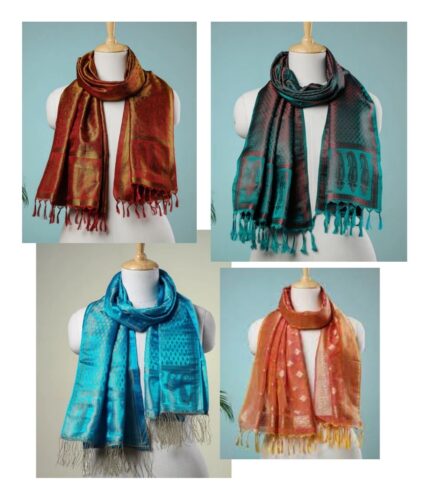
Cotton, silk, linen, handloom — they age beautifully.
Buy less. Choose better.
Simple rule. Powerful impact.
Steps Toward a Responsible Future
- Support ethical brands
- Educate consumers
- Promote handloom
- Encourage mindful buying
- Demand transparency
Small steps together create big change.
Conclusion
Fast fashion is not modern progress. It is silent destruction.
It pollutes rivers.
It exploits workers.
It weakens craft traditions.
It trains us to waste.
Style should not cost lives or landscapes.
Real fashion is thoughtful. Durable. Meaningful.
If we slow down and choose wisely, fashion can heal instead of harm.
And honestly, Guise Garner, the future of fashion will not be fast.
It will be responsible.
FAQs
1. Why is fast fashion dangerous for the environment?
Because it creates pollution, waste, and high carbon emissions.
2. Is slow fashion expensive?
It costs more initially but lasts longer, saving money over time.
3. How does fast fashion harm artisans?
Machine-made products replace handmade crafts, reducing artisan income.
4. Can small brands compete without fast fashion?
Yes. Quality, authenticity, and sustainability attract conscious buyers.
5. What is the simplest step to start today?
Buy fewer clothes and choose long-lasting fabrics.
Let’s talk about “How Comforted Ignorance Is Destroying Our Planet — And How You Can Change It”
Please don’t forget to leave a review.
Explore more by joining us on GuiseGarner !