
Authentic Maharashtrian Saree-Draping Styles
“Draped in strength and grace, the Maharashtrian saree moves like a quiet melody—
every pleat echoing courage,
every fold carrying the spirit of soil, sweat, and enduring pride.”
Overview
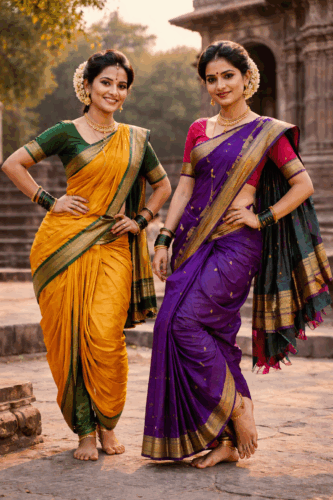
Authentic Maharashtra saree-draping reflects the region’s history of strength, mobility, and cultural pride. Rooted in agrarian life, warrior traditions, and temple customs, these drapes—especially the Nauvari—combine comfort with dignity, allowing free movement while preserving identity, ritual meaning, and timeless regional elegance.
Lets explore the style and elegance of this 9 yards beauty-
1. Nauvari Kashta Style
This nine-yard drape passes between the legs and tucks at the back, creating a trouser-like structure. It offers mobility, stability, and comfort for daily work. The pallu is worn over the shoulder, and the pleats sit firmly in front. It symbolizes strength, heritage, and practical elegance.
2. Brahmani (Brahmin) Nauvari Style
This refined Brahmin drape keeps the saree modest, structured, and ceremonial. Front pleats are neatly arranged, while the pallu rests gracefully over the shoulder without dramatic folds. It allows gentle movement yet maintains a composed look, suitable for rituals and religious functions within Maharashtrian Brahmin communities.
3. Peshwai Style
Inspired by Peshwa-era royalty, this drape uses a broad, expressive pallu and structured pleating. The style emphasizes elegance and discipline while keeping movement comfortable. It is commonly worn during festive occasions and dance representations, reflecting regal aesthetics and historical pride within Maharashtrian cultural identity.
4. Kolhapuri Nauvari Style
This regional drape from Kolhapur is compact, functional, and slightly shorter for ease of movement. The saree is wrapped firmly with tighter pleats and a controlled pallu. It suits active rural lifestyles and remains practical for daily tasks while preserving the traditional Nauvari silhouette.
5. Lavani Dance Style
Made for energetic dance movements, this drape features bold pleats, a secure waist wrap, and a dramatic pallu that enhances stage presence. It highlights body curves while supporting flexibility and rhythm. The style blends performance needs with traditional Maharashtrian aesthetics, creating a visually powerful dance identity.
6. Koli Saree Draping Style
The Koli drape is tied above the ankles for working in water and on fishing boats. The front knot keeps the saree secure, while the short pallu stays tightly wrapped. It supports fast, physical movement and reflects the vibrant cultural identity of Maharashtra’s coastal fishing communities.
7. Pathare Prabhu Draping Style
This unique Mumbai-community drape uses structured front pleats and a compact, upward pallu. It maintains sophistication while remaining easy to handle. The drape reflects the heritage of the Pathare Prabhu community, known for its urban cultural refinement and distinct regional identity.
8. Vidarbha (Kalpati) Nauvari Style
This drape showcases the wide, intricate zari borders of Vidarbha sarees. The pallu is folded downward, creating a simple, composed appearance. The pleats remain soft, and the style emphasizes textile craftsmanship rather than dramatic structure. It is traditional, elegant, and regionally significant.
9. Puneri Nauvari Style
This disciplined Pune-style drape focuses on clean pleats, a controlled pallu, and modest posture. It blends practicality with grace, offering comfort for everyday routines. The neat structure reflects Pune’s cultural preference for refinement, simplicity, and tradition without excessive ornamentation or movement-heavy styling.
10. Maratha Warrior Style (Veerangana Nauvari)
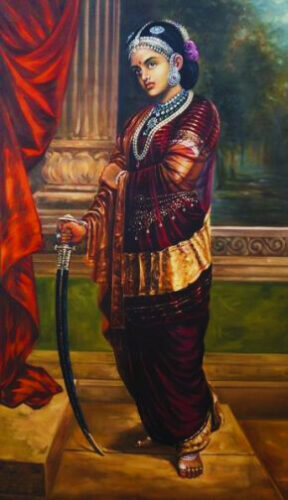
This historically inspired drape is functional and battle-ready, secured tightly between the legs for strength and agility. It allowed women warriors to ride horses, handle weapons, and move freely. The style symbolizes courage, mobility, and the martial traditions of the Maratha empire.

This was very well laid out and easy to follow.